1. Dispelling Common Critiques of MBTI and Jungian Functions
Commercial personality questionnaires ubiquitous on the internet (such as 16Personalities) and Carl Jung’s original theory of eight cognitive functions are fundamentally different paradigms. Popular four-letter dichotomy tests are essentially simplified versions of the Big Five personality traits cloaked in Jungian typological garments. Commercial institutions, eager to cater to public vanity and offer flattering affirmations, deliberately castrate the neuroses, shadow sides, and vulnerabilities inherent to every personality type.
Conversely, self-styled scientific critics who dismiss typology outright frequently stumble into several prevalent logical fallacies:
1. Misconception 1: Personality traits follow a "continuous normal distribution", so dichotomies and typologies are unscientific?
Conflating continuous statistical distributions with structural taxonomy is an intellectual sleight of hand.
The clearest counterexample is biological sex. Human biological metrics—height, body fat percentage, skeletal muscle mass, endocrine hormone levels, and vocal pitch—all exhibit continuous normal distributions with overlapping spectrums. Yet this does not prevent us from classifying human beings into male and female categories based on reproductive anatomy and foundational biological architecture. Similarly, the continuous distribution of phenotypic behaviors does not disprove the existence of underlying cognitive structures and preferential mental pathways.
2. Misconception 2: How could humanity possibly be divided into only 16 types?
Humanity is undoubtedly diverse beyond 16 caricatures, but this does not invalidate a 16-type baseline framework. Just as humans can be initially categorized into two sexes, Jung proposed eight fundamental cognitive functions in Psychological Types (Ti, Te, Fi, Fe, Ni, Ne, Si, Se), positing that a dominant rational judging function (T/F) must be paired with an auxiliary irrational perceiving function (N/S), and vice versa.
Myers-Briggs subsequently introduced the J/P (Judging/Perceiving) dichotomy to denote whether an individual’s extraverted function is judging (Te/Fe) or perceiving (Ne/Se), crystallizing the 16 basic structural architectures. Upon this foundation, one can integrate auxiliary balance, instinctual subtypes, and enneagram motivations, expanding the framework to 32, 64, or even more nuanced typologies.
3. Misconception 3: The test has low test-retest reliability (results shift after several months)?
The "high test-retest reliability" prized by conventional psychometric inventories is frequently an artifact of tautological questionnaires. For example, if a survey asks "Do you enjoy talking to others?", the respondent answers "Yes", and repeats "Yes" six months later, the inventory declares: "You are an extrovert." Such circular self-definitions may yield spotless statistical consistency, but they offer zero insight into deep psychological dynamics.
Genuine Jungian cognitive functions are dynamic. An individual’s cognitive maturation, current life chapter, chronic stress, and emotional individuation continuously modulate how prominently the tertiary, inferior, and shadow functions emerge. Measurable shifts in external behavior reflect structural psychological compensation, not methodological failure.
4. Misconception 4: Are cognitive functions merely the "Barnum Effect", vaguely applicable to everyone?
The Barnum Effect relies on universally flattering, non-committal platitudes (e.g., "You appear tough on the outside, but secretly crave to be understood").
In stark contrast, authentic Jungian typology describes uncompromising, mutually exclusive cognitive trade-offs and polarities. An individual heavily reliant on Ti (Introverted Thinking) for independent deconstruction inevitably experiences friction with Fe (Extraverted Feeling) collective harmony and social politics. Someone deeply immersed in Ni (Introverted Intuition) internal visions will inevitably suffer bluntness and clumsy detachment in inferior Se (Extraverted Sensing) physical realism. These acute trade-offs and shadow costs are the exact opposite of astrological flattery.
2. The True Meaning of Function Positions: Ego, Auxiliary, Tertiary, and Shadow
The first four function positions (for instance, INTP’s Ti-Ne-Si-Fe stack) are never a simple "power tier list". They represent eight subconscious psychic drives operating in a specific energetic hierarchy within individual life:
1. The Dominant Function (Ego Core / Primary Identity)
The dominant function is the person’s psychological home. It operates autonomously, effortless, and around the clock:
- Ti Dominants: Instinctively sort, deconstruct, calibrate, and categorize abstract concepts;
- Ni Dominants: Spontaneously slide into internal visions, forebodings, and symbolic pattern recognition about the future;
- Te Dominants: Naturally navigate and enforce schedules, milestones, and empirical rules, demanding accountability from themselves and others. Here lies the secret to their secular success—following timelines and executing milestones is agonizing discipline for others, but an innate comfort zone for Te dominants.
2. Auxiliary ("Right Hand") and Tertiary ("Left/Surprise Hand") Functions
The auxiliary function is one’s operational methodology—analogous to a natural "right hand"—which together with the dominant function constitutes the conscious Ego. Conversely, the tertiary function is the "surprise hand" (left hand), which, alongside the inferior fourth function, forms the secondary polarity that must be developed through life experience to balance the blind spots of the first two.
During youth, most people flaunt and glorify their dominant and auxiliary strengths while obstinately ignoring their deficits. As maturity sets in, an individual gradually recognizes blind spots and begins cultivating the tertiary and inferior functions. This transforms outward conduct, even though the subconscious bedrock of what feels fundamentally effortless remains constant:
The INTP (Ti-Ne-Si-Fe) Archetype: Popular culture assumes INTPs are naturally rigorous. In truth, an INTP’s rigor is forged when they consciously develop tertiary Si (Introverted Sensing) to anchor their auxiliary Ne (Extraverted Intuition); the truly innate practitioner of empirical rigor is the Si-Te ISTJ. The latent desire of an INTP is to cast away all dogmatic rules and indulge in wild Ne ideation. In childhood, this Ne drives adventurous exploration of every unseen nook; in adulthood, unbridled Ne can deteriorate into total disillusionment, nihilism, or apocalyptic impulses.
The Burden of Tertiary Si: To curb Ne runaway chaos, the subconscious summons tertiary Si, developing respect for historical precedent and empirical verification. However, as a non-dominant function, Si often dredges up awkward and agonizing memories of past failures (unlike dominant Si users, who find warm nostalgia in reminiscing). Furthermore, because Ne constantly demands discarding the past to evolve, individuals often harbor intense irritation toward anyone who mirrors their former, immature selves.
3. The Inferior Function: Suppressed Shadow and Toxic Eruptions
The fourth or inferior function does not signify zero capability; rather, it marks the domain the ego most vigorously represses, denies, and fears. Normally buried deep in the subconscious, under extreme duress or acute trauma it erupts in warped and toxic manifestations:
- Ti Dominants’ Toxic Fe Eruptions: Normally staunch individualists who detest emotional manipulation and communal conformity; yet during emotional breakdowns, they may weaponize victimhood, emotional guilt-tripping, and melodramatic outbursts to manipulate or retaliate against others.
- Fi Dominants’ Toxic Te Eruptions: Normally repulsed by authoritarian control or cold mechanistic dictates; yet when pushed past their breaking point or occupying moral high ground, they can display hyper-controlling, draconian authoritarianism (toxic Te), ruthlessly demanding that others bend to their personal Fi moral absolutes.
Confronting and integrating the inferior function requires looking into the abyss, confronting past weaknesses, and even embracing traits one once despised. Only through this grueling integration can psychological individuation occur.
4. The Te–Fi Tug-of-War: From Social Darwinism to The Three-Body Problem
Beyond individual psychology, the tension between Te and Fi is writ large across macro societies. In modern East Asian cultures, there is an overwhelming veneration of Te (empirical metrics, ends-justify-means pragmatism, rigid compliance) paired with contempt for Fi (individual conscience, independent aesthetics, and authentic empathy).
In worldly competition, Te dominants possess an enormous structural advantage, while Fi dominants experience the greatest existential friction (partially mitigated by European welfare systems and humanist traditions). This is why equitable institutions and compassion for the vulnerable are essential to protect human diversity. When a society completely discards Fi and bows exclusively to Te efficiency, Social Darwinism and moral nihilism run rampant. The cost is not merely cultural and aesthetic decay, but a savage, hyper-competitive hostility devoid of humanitarian boundaries.
This collective tilt toward Te is strikingly visible in public interpretations of Liu Cixin’s The Three-Body Problem trilogy. While readers readily focus on Death’s End and its critique of extreme Fi (symbolized by Cheng Xin’s moral hesitation leading to cosmic peril), they routinely overlook The Dark Forest’s scathing indictment of extreme Te. During the Crisis Era, humanity embraced radical utilitarian militarism and heavy industrialization (extreme Te), trampling individual dignity in the name of civilizational survival—a path that culminated in the catastrophic humanitarian nightmare of The Great Ravine. Only when humanity awoke and affirmed "Give time to civilization, rather than civilization to time" (restoring the humanist core of Fi) did genuine scientific and moral breakthroughs follow.
3. The Psychology of Character Building: Rejecting "Face-Changing" to Reveal Depth
In literary and dramatic writing, confining a character strictly to their dominant and auxiliary functions results in flat, cardboard archetypes. Yet abruptly flipping a character’s temperament like a stage mask shatters credibility. Masterful character development gradually pulls the tertiary and inferior functions into the light under dramatic pressure:

Homura Akemi (Puella Magi Madoka Magica | Fi-Ne to Fi-Ne-Si-Te)
"If... just supposing someone told you that you could trade your soul for a miracle, what would you do?"
Before the temporal loops, Homura was a timid INFP (Fi-Ne). Through countless cycles of tragic repetition, she forged a fully integrated Fi-Ne-Si-Te stack. Her inferior Te matured into formidable tactical planning, icy precision, and unswerving execution—setting her leagues apart from unintegrated INFPs while keeping her core Fi devotion intact.

Kyoko Sakura (Puella Magi Madoka Magica | Se-Ti Revealing Fe)
"Don’t worry, Sayaka. Being all alone is lonely, right? It’s okay. I’ll stay with you."
Outwardly an archetype of pragmatic Se-Ti—indulging in physical pleasures, fiercely self-reliant, and cynical—Kyoko reveals her tertiary Fe in the climax, choosing ultimate self-sacrifice to accompany Sayaka in death.
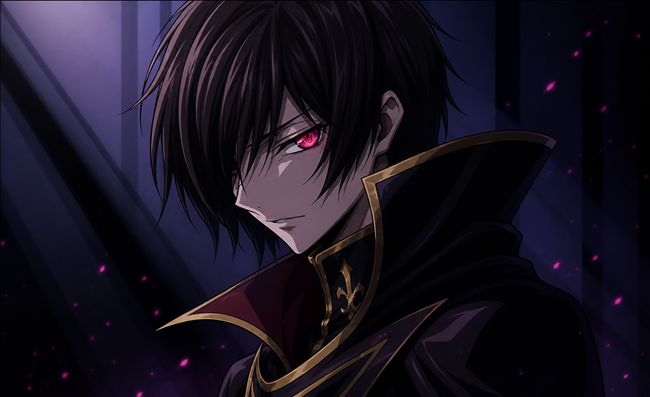


Lelouch & Shana (Ni-Te-Fi-Se) vs. Light Yagami (Te-Ni-Se-Fi)
Lelouch and Shana (Ni-Te-Fi-Se): Despite completely different story settings, both belong to the Ni-Te-Fi archetype, living predominantly within their constructed visionary inner realms.
- Manifestations of Inferior Se (Extraverted Sensing): Lelouch exhibits comical physical frailty and repeatedly miscalculates tangible physical variables in combat, precipitating crises (he also accepts the mystical Geass contract instantaneously without empirical hesitation). Early Shana spaces out in the rain lost in thought, and persistently stumbles when handling mundane domestic chores.
- Interaction Between Te and Tertiary Fi: Both execute plans with fierce, result-oriented Te precision; yet both are fundamentally driven by tertiary Fi (an uncompromising quest for authentic conscience and moral truth). Lelouch’s devotion to his sister Nunnally and agonizing remorse for his bloodshed culminates in the Zero Requiem—offering his own life for world peace. Shana’s duty as a Flame Haze (ruthless Te duty) violently collides with her love for Yuji Sakai (Fi core values), until her dominant Ni synthesizes the dialectic.
- The Fundamental Divide from Light Yagami (Te-Ni-Se-Fi): While viewers often compare Light Yagami with Lelouch, Light is an extreme Te dominant virtually devoid of Fi growth. He wields the Death Note without genuine moral remorse, effortlessly uses and discards family members, and executes anyone who threatens his supremacy. This is the crucial human divide between Lelouch and Light—a distinction too often ignored by a society blinded by Te worship.
Theoretical Boundaries: Cognitive function models and literary character analyses offer interpretive lenses for self-reflection and psychological integration. They do not constitute formal psychometric diagnosis.
Read the Integrated Theory Guide · Browse the 27 Enneagram Subtypes · Take the Cognitive Functions Test